
Why Is Christmas So Stressful? (And What You Can Actually Do About It)

Let's be honest: Christmas isn't always the magical, stress-free celebration we see in films. Between juggling family expectations, stretching your budget, and trying to make everything "perfect," the holiday season can feel more like a marathon than a celebration.
You're not alone if Christmas leaves you feeling overwhelmed. Nearly nine out of ten adults report significant stress during the holidays, with concerns ranging from financial pressure to family conflicts. The good news? Understanding why Christmas feels so stressful: and knowing what actually works to manage it: can transform your experience.
The Real Reasons Christmas Feels Overwhelming
Money Worries Take Center Stage
Financial pressure tops the list of holiday stressors. About 58% of people say spending too much or not having enough money causes them significant stress during Christmas. It's not just gifts: there's food for gatherings, travel costs, decorations, and the pressure to host elaborate celebrations.
When you're already managing everyday expenses, adding Christmas costs can feel impossible. Lower-income households feel this pressure most intensely, but even those with comfortable incomes often stretch beyond their means during the holidays.
The Perfection Trap
Christmas comes loaded with expectations. You want the perfect family gathering, the ideal gifts, flawless decorations, and magical moments that match the holiday films. These unrealistic expectations set you up for disappointment and stress.
When you're aiming for perfection, every small mishap feels like a major failure. The burnt turkey becomes a disaster rather than a minor inconvenience. Family tensions turn into evidence that you've "ruined" Christmas.

Family Dynamics Under Pressure
Gathering different personalities in close quarters creates natural tension. If relatives argue throughout the year, they'll likely clash on Christmas Day too. Add holiday stress, alcohol, and conflicting expectations, and small disagreements can escalate quickly.
Sometimes it's not outright conflict: it's the emotional labor of managing everyone's needs, keeping conversations light, and trying to ensure everyone has a good time. This invisible work often falls on one person's shoulders.
Your Schedule Becomes Impossible
Christmas means juggling an endless list: gift shopping, meal planning, decorating, attending events, managing children's school activities, meeting work deadlines before the holidays, and coordinating with multiple family groups.
This constant stream of tasks leaves no room for rest or spontaneity. You're managing logistics rather than enjoying the season, which explains why Christmas can feel like work rather than celebration.
Loneliness Hits Harder
For those separated from family by distance, divorce, loss, or estrangement, Christmas can intensify feelings of isolation. The cultural emphasis on family togetherness makes being alone during the holidays particularly difficult.
Social media doesn't help: seeing others' highlight reels of perfect family moments can make your own situation feel even more isolating.
What Actually Works to Reduce Christmas Stress
Lower Your Expectations (Seriously)
Start by accepting that Christmas won't be perfect: and that's completely okay. Plans will change, food might get overcooked, someone might say something awkward, and not everything will go according to plan.
This isn't settling for less; it's choosing reality over impossible standards. When you release the need for perfection, you can actually enjoy the imperfect moments that make holidays memorable.
Try this: Write down three things that would make Christmas "good enough" for you. Focus on these essentials and let everything else be bonus.
Set Real Boundaries Around Money
Decide your budget before you start shopping and stick to it. Remember that meaningful gifts don't require big price tags: time, attention, and thoughtfulness matter more than expense.
Consider suggesting spending limits with family members or organizing gift exchanges rather than buying for everyone. Many families find Secret Santa or "one gift per family" approaches reduce both financial stress and gift-giving pressure.
Plan Simple Activities That Bring People Together
Instead of elaborate entertainment, focus on simple activities that keep everyone engaged. Board games, walking together, or collaborative cooking can prevent the awkward silences and tensions that lead to conflict.
Having backup activities ready helps when energy levels change or moods shift. Sometimes the best holiday memories come from spontaneous moments rather than planned perfection.

Practice Genuine Self-Care
Self-care during Christmas isn't selfish: it's essential. When you're running on empty, everything feels harder and everyone around you suffers too.
Build small wellness moments into your holiday routine. Take five minutes for breathing exercises when you feel overwhelmed. Start your day with brief guided meditation before the chaos begins.
Even a warm tea or coffee break taken mindfully can reset your nervous system. These aren't luxuries: they're necessary fuel for handling holiday demands.
Create Space for Your Emotions
Christmas brings up complex feelings for many people. Grief for lost family members, anxiety about finances, frustration with family dynamics: all of these are normal and valid.
Journalling can help you process these emotions rather than pushing them down. Write about what you're feeling without judgment. Sometimes naming the stress helps reduce its power over you.
Remember: You don't have to feel grateful and joyful every moment of Christmas. Complex emotions are part of being human, especially during emotionally charged times.
Simplify Where You Can
Look at your holiday commitments and ask: "What truly matters to me and my family?" Then give yourself permission to simplify or skip everything else.
Maybe this year you buy dessert instead of making it from scratch. Perhaps you send digital holiday cards instead of handwritten ones. Or you might choose to celebrate with fewer people in a more relaxed setting.
Simplifying isn't giving up: it's choosing what deserves your energy.

Be Kind to Others (And Yourself)
Everyone carries invisible stress during the holidays. Your partner might be worried about work deadlines. Your mother might be grieving her first Christmas without her own parent. Your child might be overstimulated and acting out.
When tensions arise, take a breath before responding. Often, difficult behavior during holidays comes from stress rather than malice. This doesn't mean accepting bad treatment, but approaching conflicts with curiosity rather than defensiveness often helps.
Most importantly, extend this same compassion to yourself. You're doing your best in challenging circumstances.
Know When to Seek Support
If Christmas consistently brings overwhelming stress, anxiety, or depression, consider professional support. Therapy provides tools for managing family dynamics, processing grief, and developing coping strategies.
For seasonal depression, light therapy and counseling can make significant differences. There's no shame in getting help: it's actually a gift to yourself and your loved ones.
Moving Forward with Realistic Hope
Christmas stress is real, common, and completely understandable. The solution isn't to eliminate all stress: that's impossible. Instead, it's about managing stress in ways that allow you to find genuine moments of connection and joy amid the chaos.
Start small this year. Choose one or two strategies that feel manageable and build from there. Focus on what you can control and release what you can't.
The best Christmas gift you can give yourself and your loved ones is your presence, not your perfection.
Your holidays don't need to look like anyone else's to be meaningful. Sometimes the most memorable Christmases are the ones that go completely off-script.
5 Micro-Habits for Wellness That Rewire Your Brain in Just 15 Minutes Daily
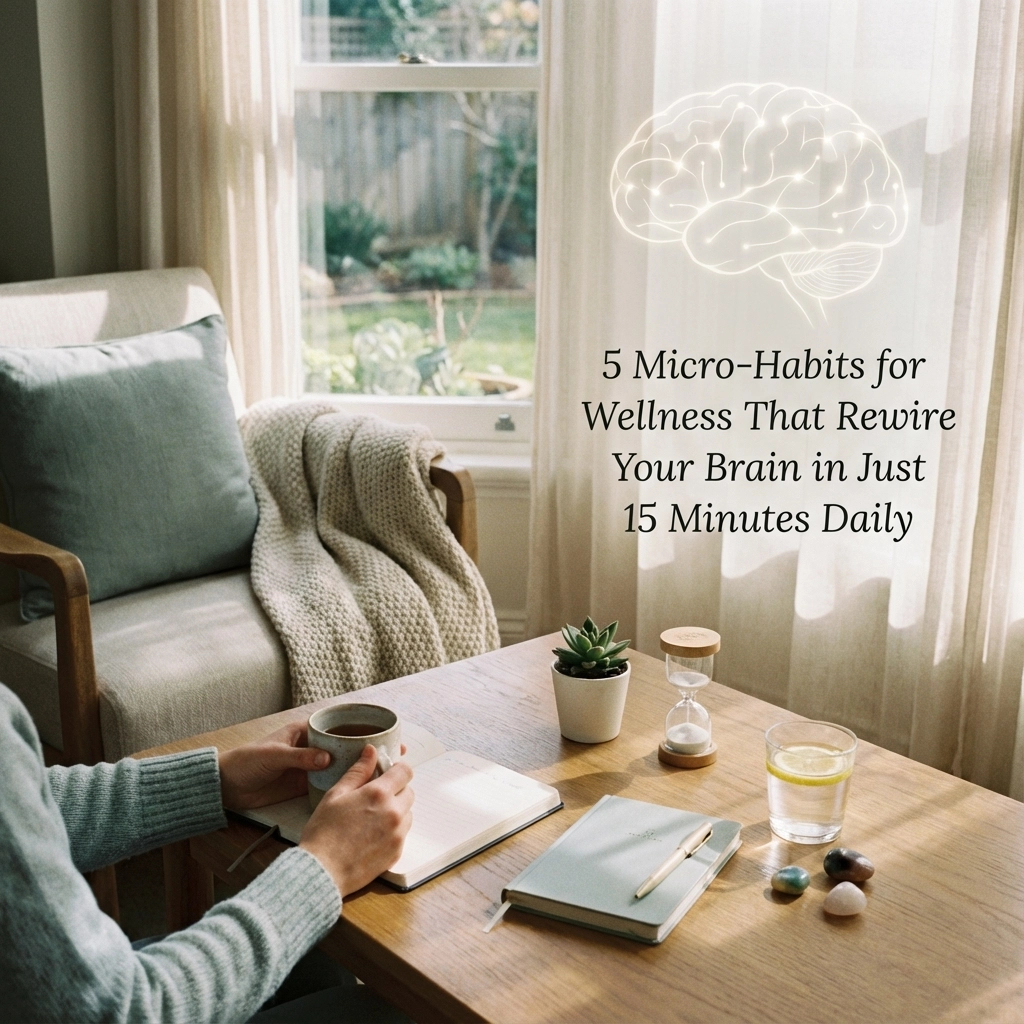
Your brain is incredibly adaptable, constantly forming new neural pathways based on what you do repeatedly. This process, called neuroplasticity, means that even tiny daily actions can create lasting changes in how your brain functions. The best part? You don't need hours of meditation or complex routines to tap into this power.
Research shows that just 15 minutes of intentional micro-habit practice can activate your brain's ability to form new connections and establish lasting behavioral change. These small, consistent actions accumulate over time, producing measurable improvements in mental clarity, mood, and cognitive function.
Here are five science-backed micro-habits that fit perfectly into your daily routine while rewiring your brain for better wellness.
Habit 1: The 2-Minute Morning Brain Reset

How to Do It
Start your day with a simple two-minute mental reset before checking your phone or diving into your routine. Sit comfortably on the edge of your bed or in a quiet space and focus on your breathing. Take slow, deep breaths: inhaling for four counts, holding for four, and exhaling for six counts. If your mind wanders (and it will), gently bring your attention back to your breath.
No meditation experience needed. You're simply giving your brain a moment to transition from sleep mode to awake mode with intention rather than rushing into reactive patterns.
Why It Works
This brief practice activates your parasympathetic nervous system, which reduces stress hormones like cortisol and promotes mental clarity. When you start your day with intentional breathing, you're literally rewiring your brain's default response to daily stressors. Over time, this consistency strengthens your prefrontal cortex: the brain region responsible for decision-making and emotional regulation.
When to Use It
Perfect for those first two minutes after waking, before your feet hit the floor. If mornings feel too rushed, try it right after your first sip of coffee or tea. The key is consistency, not perfection.
Habit 2: Mindful Movement Moments
How to Do It
Set a timer for two minutes and move your body intentionally: no gym required. This could be gentle stretching at your desk, walking around your home, rolling your shoulders, or doing simple arm circles. The movement doesn't need to be intense or structured; it just needs to be mindful.
Pay attention to how your body feels as you move. Notice areas of tension releasing, the sensation of your muscles activating, or the rhythm of your movement. You're not trying to get a workout; you're creating a mindful connection between your brain and body.
Why It Works
Mindful movement activates your motor cortex and increases blood flow to your brain, enhancing focus and mental energy. This practice breaks up periods of mental stagnation and helps your brain form new neural pathways between physical awareness and cognitive function. Regular movement bursts also release feel-good neurotransmitters like endorphins and dopamine.
When to Use It
Try this during natural transition points in your day: between meetings, after lunch, or when you notice your energy flagging. It's particularly effective as a midday reset when mental fatigue starts to creep in.
Your brain craves movement as much as it craves rest.
Habit 3: Three-Minute Gratitude Practice

How to Do It
Each evening, identify three specific things you're genuinely grateful for from that day. Write them down or simply reflect on them mentally. The key is specificity: instead of "I'm grateful for my family," try "I'm grateful for the way my partner made me laugh during dinner" or "I'm grateful that my colleague helped me solve that tricky problem."
Spend about a minute on each gratitude, letting yourself truly feel the positive emotion connected to it. You're not just making a list; you're savoring the good moments from your day.
Why It Works
This practice actively rewires your brain's negativity bias: our natural tendency to focus on problems and threats. When you regularly direct your attention toward positive experiences, you strengthen neural circuits associated with wellbeing and life satisfaction. Research shows that consistent gratitude practice can actually change the structure of your brain, making you naturally more optimistic over time.
When to Use It
Perfect as a wind-down ritual before bed, during dinner preparation, or while having your evening cup of tea. Choose a time when you can reflect without rushing to the next activity.
Habit 4: Five-Minute Mindful Consumption
How to Do It
Choose one daily consumption moment: your morning coffee, lunch, or evening snack: and experience it with complete presence. Put away your phone, close your laptop, and focus entirely on what you're consuming.
Notice the temperature, texture, flavor, and aroma. Chew slowly if you're eating, or savor each sip if you're drinking. When your mind inevitably drifts to your to-do list or worries, gently bring your attention back to the sensory experience of consumption.
You can enhance this experience with our tea or coffee break resources for additional mindful moments throughout your day.
Why It Works
Mindful consumption strengthens your prefrontal cortex: the brain region responsible for attention control and impulse regulation. This practice builds your capacity for sustained focus while creating positive associations with nourishment and self-care. Regular mindful eating also improves digestion and helps you develop a healthier relationship with food and beverages.
When to Use It
Any meal or drink works, but morning coffee or tea often provides the most consistent opportunity. The key is choosing the same consumption moment each day to build the neural pathway through repetition.
Habit 5: Three-Minute Sleep Preparation Ritual

How to Do It
Create a simple three-minute transition ritual before bed that signals to your brain that sleep is approaching. This could include gentle stretching, writing down three thoughts from your day, practicing deep breathing, or doing light movement to release tension.
Keep it simple and consistent. You might try some gentle stretching exercises or explore our breathing exercises to find what feels most natural for you.
The goal isn't to solve all your problems or achieve perfect relaxation: you're simply creating a consistent bridge between your active day and restorative sleep.
Why It Works
This ritual strengthens your brain's ability to regulate circadian rhythms and transition from active mode to rest mode. Consistent sleep preparation helps your nervous system recognize and respond to sleep cues more effectively. Over time, this practice can improve both sleep quality and the brain's ability to consolidate memories and process emotions during sleep.
When to Use It
Aim for the same time each night, ideally 30-60 minutes before you want to fall asleep. This gives your brain time to start the natural wind-down process while the ritual creates a predictable routine your nervous system can anticipate.
Small rituals create big transformations in how your brain approaches rest.
Making It Work for Your Life
These five habits total approximately 15 minutes and can be scattered throughout your day rather than completed all at once. Start with just one or two habits that feel most appealing or manageable for your current routine. Your brain responds better to gradual change than dramatic overhauls.
Remember, consistency matters more than perfection. Missing a day doesn't erase your progress: your brain is remarkably forgiving and adaptable. Each time you return to these practices, you're strengthening the neural pathways that support your wellbeing.
The beauty of micro-habits lies in their accessibility. No special equipment, expensive programs, or hours of time required. You're simply working with your brain's natural capacity for change, one small moment at a time.
For additional support in building these wellness habits, explore our range of guided meditation and journalling resources designed to complement your daily practice.
Your brain is already changing: these habits just help you steer it in the direction of greater wellness and resilience.